Helping your body come back online by restoring the connection between your nervous system and your muscles.
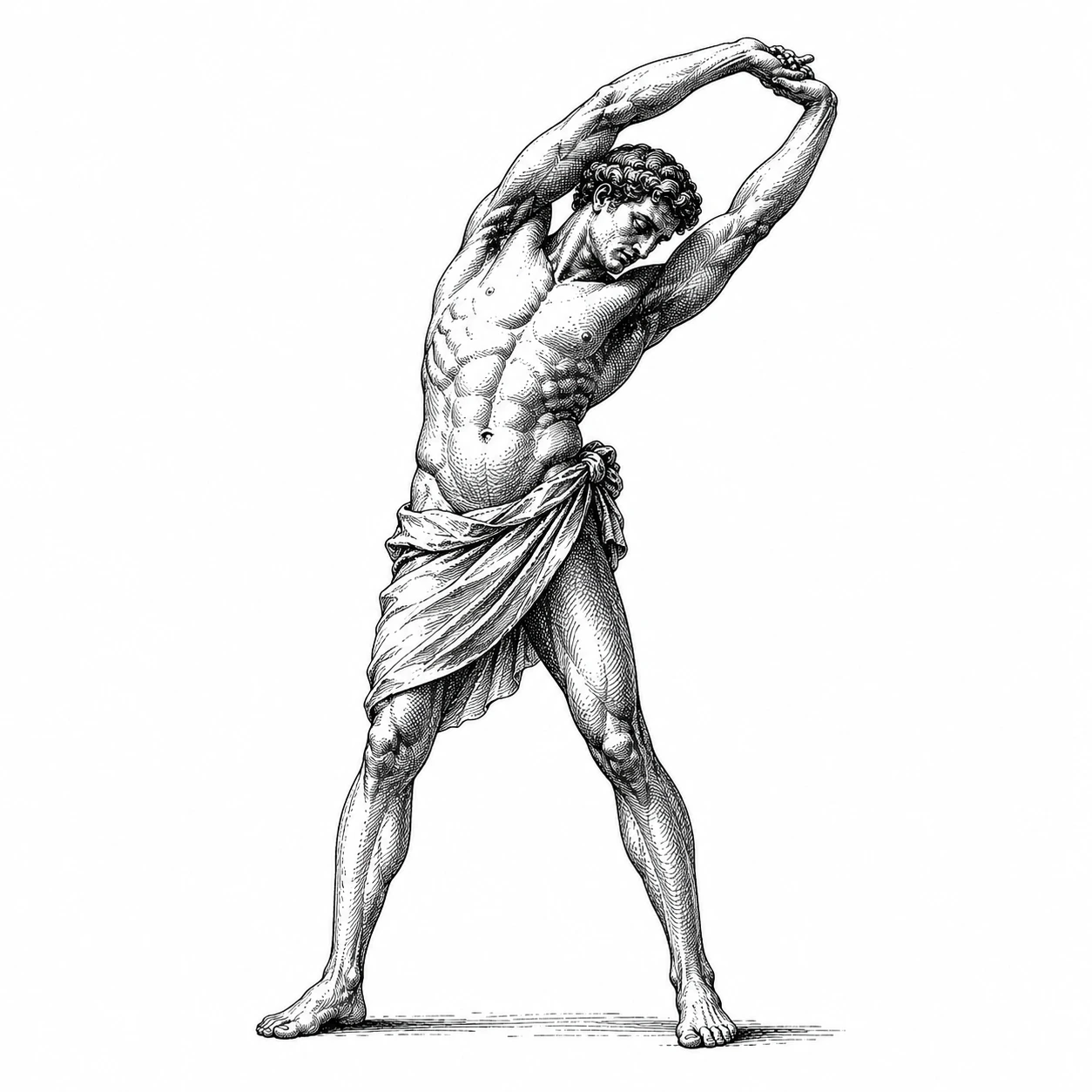
Pandiculation: Nature’s Reset Button

Why Pandiculation is Better For You Than Stretching
We inhabit an animal body, yet we are the only species that applies a forced, determined effort to pull and stretch our muscles.
Imagine sitting at your computer all day: your spine is rigid, your jaw is clenched, and your body feels locked. When you finally stand up, your instinct might be to force yourself into a deep stretch. But there is an elegant, readily available alternative to reclaim your natural vitality, flexibility, and vigor.
It is called pandiculation.

What is Pandiculation? The Science of Neuro-Muscular Reset
Pandiculation is a natural, involuntary nervous system reflex designed to reset our neuro-muscular memory. Unlike conventional stretching, which pulls a passive muscle to its limit, pandiculation involves a deliberate, gentle contraction of a muscle group, followed by a slow, conscious release back to a state of complete relaxation.
The word originates from the Latin pandiculare, which means “to expand.” And that is precisely what you experience: a profound sense of somatic expansion.
The Animal Wisdom: Why Cats and Dogs Don’t “Stretch”
You can easily observe this phenomenon in domestic animals. Dogs and cats pandiculate dozens of times a day. When they wake up from a nap, they don’t perform static stretches; they arch their backs, contract their muscles, and slowly lengthen out. Beyond inducing deep relaxation, this mechanism primes the animal’s nervous system and muscles for immediate, fluid movement.
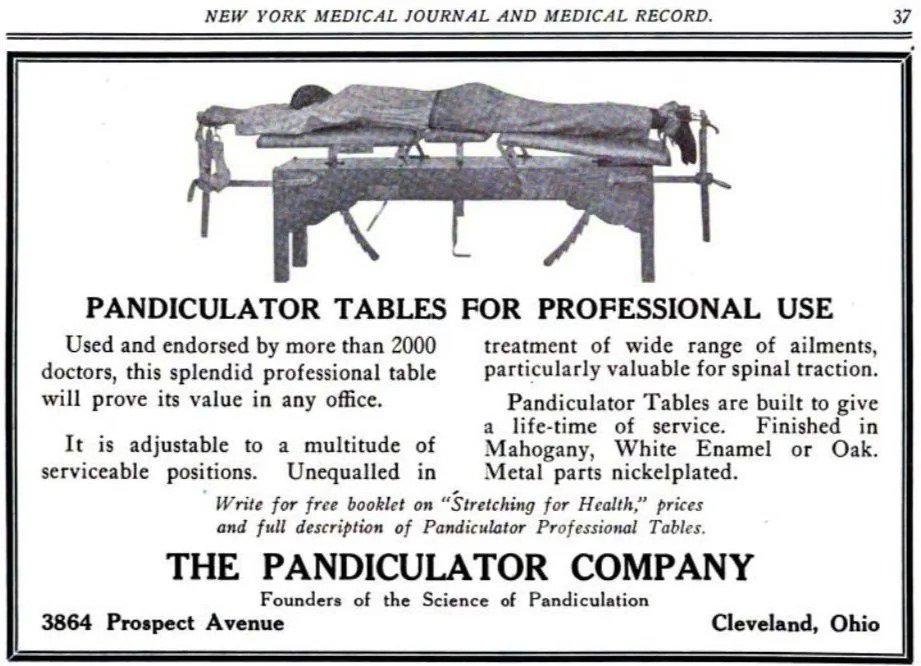
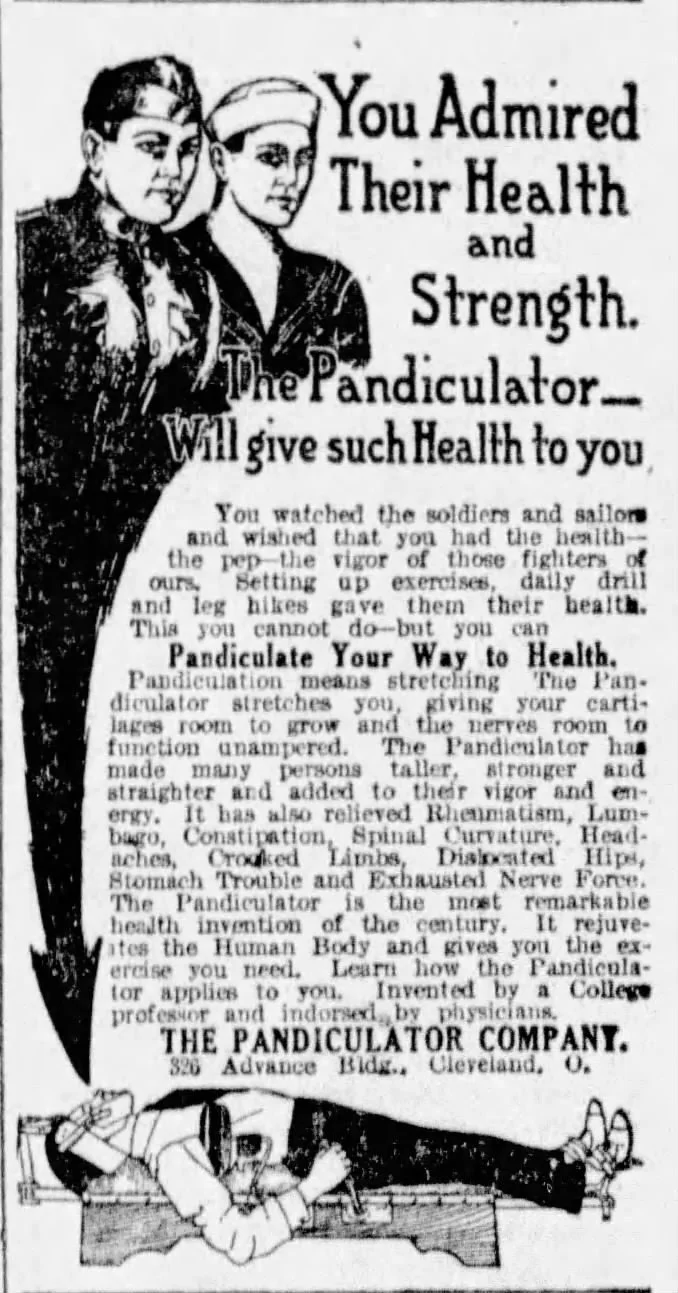
The History of the “Pandiculation Machine”: Why It Failed
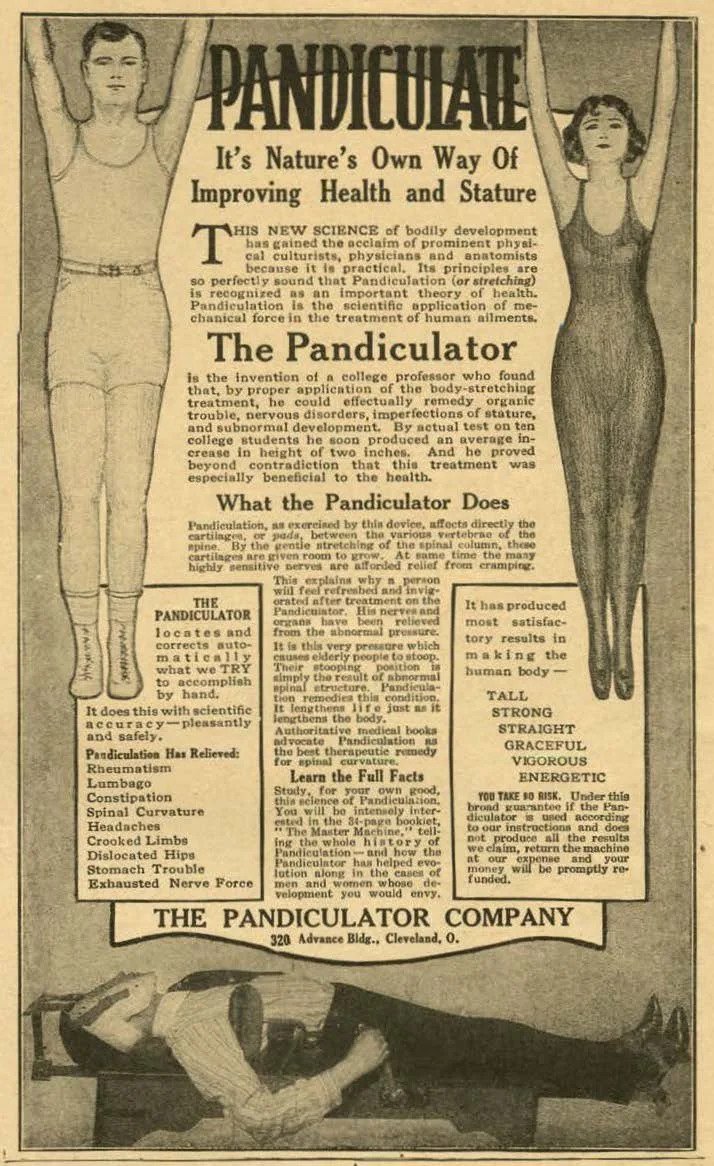
To understand why pandiculation remains an obscure concept today, we have to look back at a bizarre chapter in twentieth-century wellness. From 1914 to 1942, several magazines ran advertisements for a mechanical device that promised to “pandiculate” you. The promoters claimed that just 15 minutes on this machine would relieve pain, prevent injury, and restore youth.
The public was enamored, but the medical and legal systems eventually caught on. In 1942, Time magazine published a definitive article titled “No More Pandiculation.” The United States Post Office officially banned the company from using the mail service, labeling the promoter a fraud.
Unfortunately for the somatic lineage, this historical scandal attached a temporary stigma to the word, burying a profound physiological truth under the wreckage of a fraudulent marketing scheme.
Why True Pandiculation Cannot Be Mechanized
The fatal flaw of the 1940s machine—and the reason it was rightfully banned—lies in the very definition of somatic movement: no machine or external person can pandiculate you.
Pandiculation is not a passive pulling of tissue. It requires a bio-feedback loop that happens exclusively between your sensory-motor cortex and your muscular system.
The Illusion of Passive Stretching: When a machine stretches you, or a therapist pulls your limbs, your brain remains passive. In fact, if an external force pulls too hard, your nervous system perceives it as a threat and triggers the stretch reflex, causing the muscle to tighten even further to protect itself.
The Reality of Somatic Autonomy: True pandiculation requires an internal command. You must initiate the contraction, you must perceive the tension, and you must mindfully guide the slow elongation.
The Profane Origins of Yoga: A Moving Prayer
Pandiculation can be beautifully compared to Surya Namaskar (Sun Salutation), a moving prayer. As discussed in a previous article, the profane, human origins of yoga are rarely acknowledged. If yoga had truly descended directly from the gods, why wouldn’t those deities have assumed a physical form first to experience the full, seasonal spectrum of human embodiment?
Yoga emerged from the depths of human necessity and bodily intuition. Pandiculation may very well be its natural, primal origin.
Babies Do It Naturally—And You Should Remember It Too
Newborns and infants pandiculate constantly to map their nervous systems. Somewhere along the line of adulthood, we forgot how to listen to this innate intelligence.
"Instead of a complex mantra, just let yourself yawn.
That is your first, most authentic mantra."
The Power of the Conscious Yawn
Yawning is the most accessible form of pandiculation. After 15 years of practicing and teaching yoga, utilizing complex mantras and rigid asanas, I returned to the basics—to the place where everything starts: natural, authentic movement and voice.
When you yawn, you intensely contract the muscles of your jaw, neck, chest, and arms. Even though it is an involuntary reflex, you can consciously initiate it right now to release deep-seated cranial and cervical tension.
Pandiculation vs. Stretching: What Happens in Your Brain?
To understand why pandiculation is superior to static stretching, we must look at the sensory-motor cortex—the brain’s command center for sensing and moving the body.
| Feature | Stretching | Pandiculation |
| Brain Engagement | Passive (often bypasses cortical awareness) | Active (highly engages the sensory-motor cortex) |
| Mechanism | Pulls on tight tissues, risking the stretch reflex | Contracts first, then slowly elongates with focus |
| Neurological Result | Can trigger protective tension and micro-tears | Resets the resting tonus of the muscle |
| Sensation | Strain or mild discomfort | Deep release and spatial expansion |
Overcoming Sensory-Motor Amnesia
When you sit at a desk for hours, your brain literally forgets how to relax certain muscles—a state known as Sensory-Motor Amnesia.
When you pandiculate, you actively command your brain to contract a specific group of muscles for a second or two, and then you lengthen them with acute focus and attention. The signal produced by this deliberate contraction alerts the sensory-motor cortex, preparing the body for action.
The magic happens during the subsequent, slow release: by mindfully melting the contraction away, you rewrite the neurological blueprint of that muscle, leading to instant relaxation, true flexibility, and an improved range of motion.
Stay grounded,
Adrian Băjenaru
